
- You are here:
-
Home

- News
News
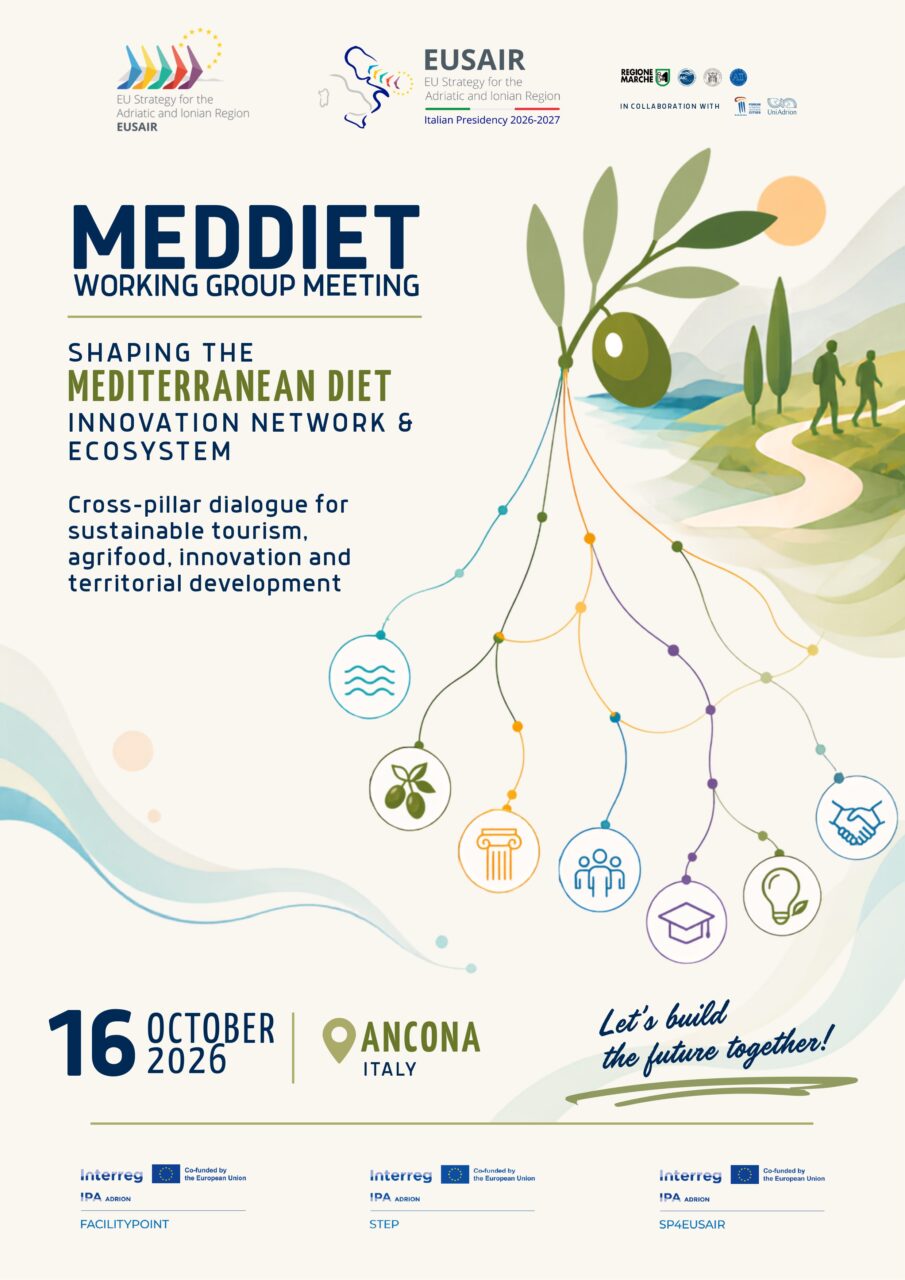
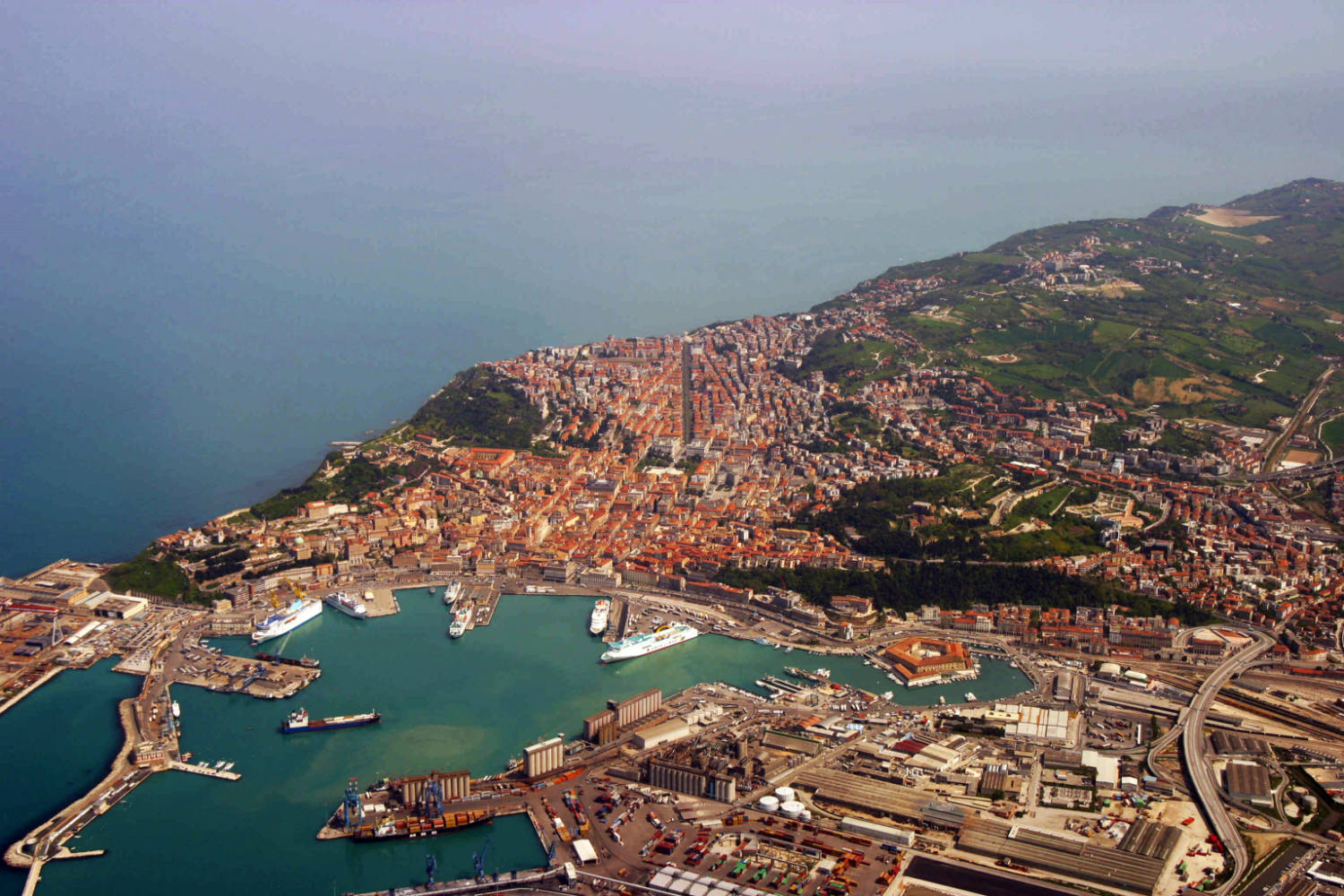
On 16 October 2026, Ancona will host the MEDDIET Working Group Meeting – “Exploring a Mediterranean Diet Innovation Network and Ecosystem: Cross-pillar dialogue for sustainable tourism, agrifood, innovation and territorial development”, at the Faculty of Economics of Marche Polytechnic University (UNIVPM).
The meeting will take place within the framework of the Italian Presidency of EUSAIR and of the cross-pillar cooperation among Pillar 1 – Blue Sustainable Economy, Pillar 4 – Sustainable Tourism and Pillar 5 – Improved Social Cohesion.
The event is hosted by the Marche Region and the Forum of the Adriatic and Ionian Chambers of Commerce (Forum AIC), in collaboration with Marche Polytechnic University (UNIVPM) and the Adriatic-Ionian Initiative Permanent Secretariat.
The meeting will bring together representatives of EUSAIR governance, national and regional authorities, universities, research organisations, Chambers of Commerce, businesses and civil society organisations from across the Adriatic-Ionian Region, with the aim of contributing to the further development of the MEDDIET Flagship.
Building on the work already carried out within EUSAIR, participants will exchange experiences and identify common priorities to strengthen cooperation between different sectors and levels of governance, exploring the contribution of the Mediterranean Diet to sustainable tourism, territorial development, innovation and skills development.
Particular attention will be devoted to the potential development of a Mediterranean Diet Innovation Network and Ecosystem, connecting universities, research organisations, Competence Centres, Living Labs, Biodistricts, Regional Agri-food Partnerships, Chambers of Commerce, businesses and public authorities in a common macro-regional framework. The objective is to foster stronger links between agrifood, tourism, research, innovation and territorial development across the Adriatic-Ionian Region.
Designed as an interactive Working Group rather than a traditional conference, the meeting will combine short inspirational contributions, participatory discussions and networking opportunities. The programme will also include a study visit showcasing regional good practices in research, innovation, sustainable food systems and territorial development.
Further information and the updated programme will be available soon.

On 8 September 2026, the Permanent Secretariat of the Adriatic-Ionian Initiative (AII-PS) participated in the Kick-off Meeting of NAVIMORE – “The Power of Data for Economic Enhancement”, a new project co-financed by the European Union under the Interreg Italy-Croatia 2021–2027 Programme, Third Call for Proposals.
The meeting officially marked the launch of the project activities and brought together project partners and associated partners to discuss NAVIMORE’s objectives, planned actions and next steps.
NAVIMORE focuses on the strategic use of data, digital tools and interoperability as drivers for economic development and stronger cross-border cooperation. By addressing data fragmentation and improving the capacity of institutions and relevant stakeholders to collect, share and use information more effectively, the project aims to contribute to more integrated and coordinated approaches across the two shores of the Adriatic.
A key element of the project will be the development of a Cross-Border Governance Model, designed to provide a shared framework for addressing common challenges and opportunities in the Italy-Croatia cooperation area and strengthening cooperation among institutions, territories and economic actors.
The AII Permanent Secretariat participates in NAVIMORE as an Associated Partner, bringing to the project its institutional experience and its network across the Adriatic-Ionian region. The Secretariat will contribute to promoting the project and its results among relevant institutions and stakeholders, supporting their dissemination and fostering links with the wider framework of regional and macro-regional cooperation.
Participation in NAVIMORE is consistent with the mission of the Adriatic-Ionian Initiative to promote dialogue, regional cooperation and closer connections among the countries and territories of the Adriatic-Ionian area. It also offers an opportunity to strengthen synergies between cross-border initiatives and broader cooperation processes in the Region.
Through improved interoperability, knowledge exchange and closer institutional cooperation, NAVIMORE seeks to develop solutions capable of supporting more connected, effective and sustainable cross-border governance, while creating results and experiences that can also be shared across the wider Adriatic-Ionian region.
The AII Permanent Secretariat looks forward to contributing to the implementation of NAVIMORE and to supporting the dissemination and capitalisation of its results within its institutional network.
NAVIMORE is co-financed by the European Union through the Interreg Italy-Croatia 2021–2027 Programme.
Si è conclusa la procedura di selezione comparativa per il conferimento di un incarico di collaborazione a supporto del Segretariato Permanente dell’Iniziativa Adriatico-Ionica per l’attuazione della Presidenza italiana dell’Iniziativa Adriatico-Ionica.
A seguito della valutazione dei titoli, curricula e dei colloqui, svoltisi in modalità telematica il 27 agosto 2026, la Commissione di valutazione ha definito la graduatoria finale sulla base del punteggio complessivo conseguito dai candidati.
La graduatoria finale risulta la seguente:
Codice 02 — 92/100 punti
Codice 03 — 80,40/100 punti
Codice 01 — Non classificato
La graduatoria è pubblicata utilizzando i codici identificativi assegnati ai candidati, in luogo dei nominativi, al fine di garantirne la riservatezza.

The 13th REDETE Conference - Researching Economic Development and Entrepreneurship took place in Ancona on 9-10 September 2026, bringing together academics, researchers, policy-makers and practitioners to discuss the main economic and geopolitical challenges affecting the Adriatic-Ionian Region.
The Conference, organised by the University of Banja Luka and the Marche Polytechnic University, with the Adriatic and Ionian Initiative as a partner, focused this year on “Geopolitical Shifts, Supply Chains, and Regional Resilience in the Adriatic-Ionian Region”. As in previous editions, particular attention was devoted to the Adriatic-Ionian area and the Western Balkans, with European integration and enlargement featuring prominently throughout the programme.
The event took place in the framework of the 2026–2027 Italian AII/EUSAIR Chairmanship, which has placed the European integration of the Western Balkans among its main priorities.
On 9 September, Ambassador Giovanni Castellaneta, Secretary General of the Adriatic and Ionian Initiative, participated in the opening Plenary Session “Setting the Stage: Adriatic-Ionian Region and the Enlargement Scenario”, together with Prof. Laura Resmini of the University of Milano-Bicocca.
The session provided an important opportunity to discuss the political and economic implications of European integration and enlargement for the Adriatic-Ionian Region and, in particular, for the Western Balkans.
Addressing enlargement from a political perspective, Ambassador Castellaneta underlined that EU enlargement is today a strategic choice for the future of Europe, particularly in the current geopolitical context. He stressed the need for a common commitment to make the accession process more credible, concrete and effective, while ensuring that the Western Balkans remain fully at the centre of the European integration agenda.
He also highlighted the importance of gradual integration, allowing candidate countries to benefit from closer integration with the European Union even before accession through access to the Single Market, European programmes and other practical opportunities. Such measures, he stressed, must remain a bridge towards full EU membership and not an alternative to it.
Ambassador Castellaneta also recalled the strong commitment of the Italian Government to the European perspective of the Western Balkans, which continues to represent a key priority of Italy’s foreign policy and of the current Italian AII/EUSAIR Chairmanship.
Complementing the political perspective, Prof. Laura Resmini addressed enlargement and European integration from an economic point of view, focusing in particular on foreign direct investment, trade and the growing integration of the Western Balkan economies into European and global economic networks. Her contribution highlighted how stronger trade and investment links have contributed to increasing the resilience of the Western Balkans and their capacity to respond to external economic shocks.
The discussion confirmed the importance of combining the political and economic dimensions of enlargement. European integration is not only an institutional process, but also a means to strengthen economic ties, resilience and opportunities across the region.
In the broader framework of REDETE26, the REDETE Summer School “Regional Resilience, Innovation and Economic Transformation in the Adriatic–Ionian Region” was also launched in Ancona on 7 September. The Summer School, organised as an Erasmus+ Blended Intensive Programme, brought together around 60 students from five countries of the Adriatic-Ionian area for a week of lectures, seminars, workshops and direct participation in the REDETE Conference.
Filippo Alabardi, Executive Officer of the Adriatic and Ionian Initiative Permanent Secretariat, took part in the opening session with a contribution on “The Adriatic and Ionian Macro-Region as a Cooperation Platform”. He presented the origins and role of the Adriatic and Ionian Initiative and EUSAIR, highlighting their complementarity and the contribution of regional and macro-regional cooperation to the European integration process of the Western Balkans. Particular attention was devoted to the role of AII in promoting the establishment of EUSAIR and to the way in which the Strategy today enables EU Member States and candidate countries to work together on shared priorities and gradually strengthen their integration into the European framework.
For further information on the Conference and its programme, visit the official REDETE website: https://redete.org/
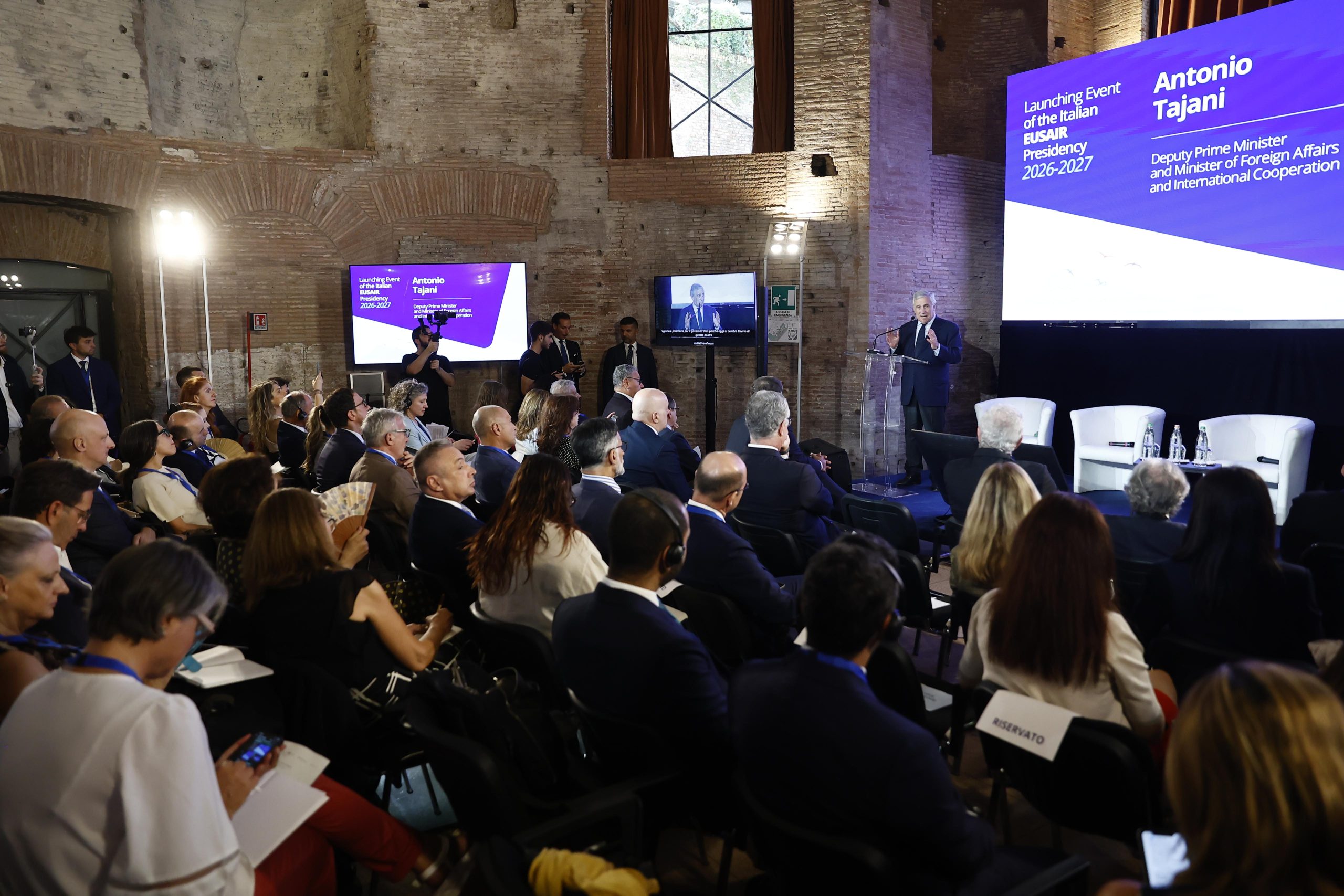
The Italian Presidency of the EU Strategy for the Adriatic and Ionian Region (EUSAIR) for 2026–2027 was officially launched in Rome on 28 July during a high-level event held at Unioncamere's Horti Sallustiani Conference Centre, bringing together representatives of the Italian Government, the European Commission, regional authorities and key stakeholders from across the Adriatic-Ionian area.
The event marked the beginning of Italy's Presidency under the motto "Identity, Cohesion, European Integration", reaffirming the strategic importance of the Adriatic-Ionian macro-region at a time of profound geopolitical change and renewed momentum for EU enlargement.
Opening the conference, Unioncamere Secretary General Giuseppe Tripoli underlined the importance of a bottom-up approach to macro-regional cooperation, highlighting the role of economic actors, chambers of commerce and infrastructure development in strengthening territorial cohesion. He reaffirmed the readiness of the Italian chamber system to actively support the Italian Presidency through the Forum of the Adriatic and Ionian Chambers of Commerce, further strengthening the contribution of the business community to macro-regional cooperation.
Italian Minister for European Affairs, PNRR and Cohesion Policies Tommaso Foti stressed that the Presidency builds upon the work initiated during the previous Presidency, officially handed over in Skopje last May. He thanked the Adriatic-Ionian Initiative (AII) and Secretary General Ambassador Giovanni Castellaneta for their continuous support to EUSAIR. Minister Foti reiterated that EU enlargement to the Western Balkans remains one of Italy's foremost foreign policy priorities, while emphasizing that progress must continue to be based on merit and the rule of law. He also highlighted the importance of addressing demographic decline through the "Right to Stay" initiative, tackling climate challenges and promoting territorial cohesion, including improved connectivity and digital infrastructure.
European Commission Executive Vice-President and Commissioner for Cohesion and Reforms Raffaele Fitto described EUSAIR as the macro-regional strategy with the largest participation of non-EU countries, making it a unique platform to accompany the enlargement process. He stressed that strengthening the EU's external dimension and reinforcing the Single Market are complementary priorities for the current European Commission. Although macro-regional strategies do not have dedicated financial instruments, he recalled that they can effectively mobilise cohesion policy resources and Interreg programmes. Commissioner Fitto also highlighted three flagship initiatives currently promoted by the Commission: a strategy for islands and coastal communities, the Right to Stay initiative addressing depopulation and territorial disparities, and a new European tourism strategy, while underlining the need to fully engage young people in shaping the future of the region.
Deputy Prime Minister and Minister of Foreign Affairs Antonio Tajani reaffirmed that the Western Balkans remain a strategic priority for Italy and that supporting their European path is a cornerstone of Italian foreign policy. He also outlined several flagship connectivity projects, including the development of transport corridors, railway links and energy market integration, stressing that greater regional connectivity is essential both for political stability and for strengthening trade and economic relations throughout the Adriatic-Ionian area.
Regional perspectives were also brought to the discussion. Francesca Pantaloni, Regional Minister of the Marche Region, highlighted the importance of governance at all levels, stakeholder participation and cooperation among Adriatic ports, while recalling initiatives aimed at promoting the Mediterranean Diet as a shared cultural heritage. In a video message, Massimiliano Fedriga, President of the Friuli Venezia Giulia Region and President of the Conference of Italian Regions, emphasised the importance of territorial cohesion and regional cooperation in responding to today's challenges. MEP Carlo Ciccioli underlined that the current geopolitical context offers a timely opportunity to relaunch the Adriatic-Ionian macro-region, noting the growing strategic importance of the Mediterranean and announcing the establishment of a dedicated parliamentary working group on EUSAIR.
Speaking during the session dedicated to the Italian Presidency, AII Secretary General Ambassador Giovanni Castellaneta reaffirmed that, in today's challenging international environment, strengthening regional cooperation is no longer simply an opportunity but a political necessity. He recalled that supporting the European integration of the Western Balkans remains the Adriatic-Ionian Initiative's core mission and pledged the Permanent Secretariat's full technical, organisational and political support throughout the Italian Presidency.
Ambassador Castellaneta also outlined the main AII institutional milestones that will accompany the Presidency, including the meetings of the Committee of Senior Officials, the Conference of Presidents of the Adriatic-Ionian Parliaments and the Adriatic-Ionian Council in 2027. He highlighted the central role of scholarships, internships and youth initiatives, together with the contribution of the three AII Fora of Chambers of Commerce, Cities and Universities, whose extensive networks embody the Initiative's distinctive bottom-up approach to regional cooperation.
The technical part of the programme continued with contributions from Elisa Cocco (European Commission, DG REGIO), Zuica Zmejkovska (Ministry for European Affairs of North Macedonia, representing the outgoing EUSAIR Presidency), Michele Palma (Head of the Department for Cohesion Policies of the Italian Presidency of the Council of Ministers and Main Coordinator of the Italian EUSAIR Presidency) and Nicola Verola, Director General for Europe and International Trade Policy at the Italian Ministry of Foreign Affairs and International Cooperation.
The launch event confirmed Italy's ambition to use its Presidency to strengthen political dialogue, deepen regional cooperation and accelerate the European integration of the Western Balkans, while reinforcing EUSAIR as a strategic framework for cohesion, connectivity and sustainable development across the Adriatic-Ionian region.